The Dental Disease Your Dog or Cat Is Hiding From You
Pets are experts at hiding discomfort, and nowhere is that more true than in their mouths.
September 4, 2026 · 4 min read
Dental disease is the most common condition Kyle Animal Hospital's veterinarians see in dogs and cats, and it is also the one owners are least likely to catch on their own. That is not a knock on you. Pets are experts at hiding discomfort. A dog with a fractured tooth will still eat kibble. A cat with inflamed gums will still purr in your lap. The mouth is one of the few places on a pet's body an owner almost never gets a close, unhurried look at, so the disease has months, sometimes years, to progress quietly before anyone notices anything is wrong.
Why it goes unnoticed
Bad breath is usually the first sign, and it is also the sign most owners dismiss, because we are told from childhood that dogs just have bad breath. They do not, not the way a healthy mouth smells. What you are catching a whiff of is usually bacteria breaking down along the gumline, the same bacteria that, left alone, works its way under the gum and starts loosening the tooth from the bone that holds it. By the time a pet stops eating on one side of its mouth, drops food, or paws at its face, the disease has usually been building for a long time already.
What a cleaning under anesthesia actually involves
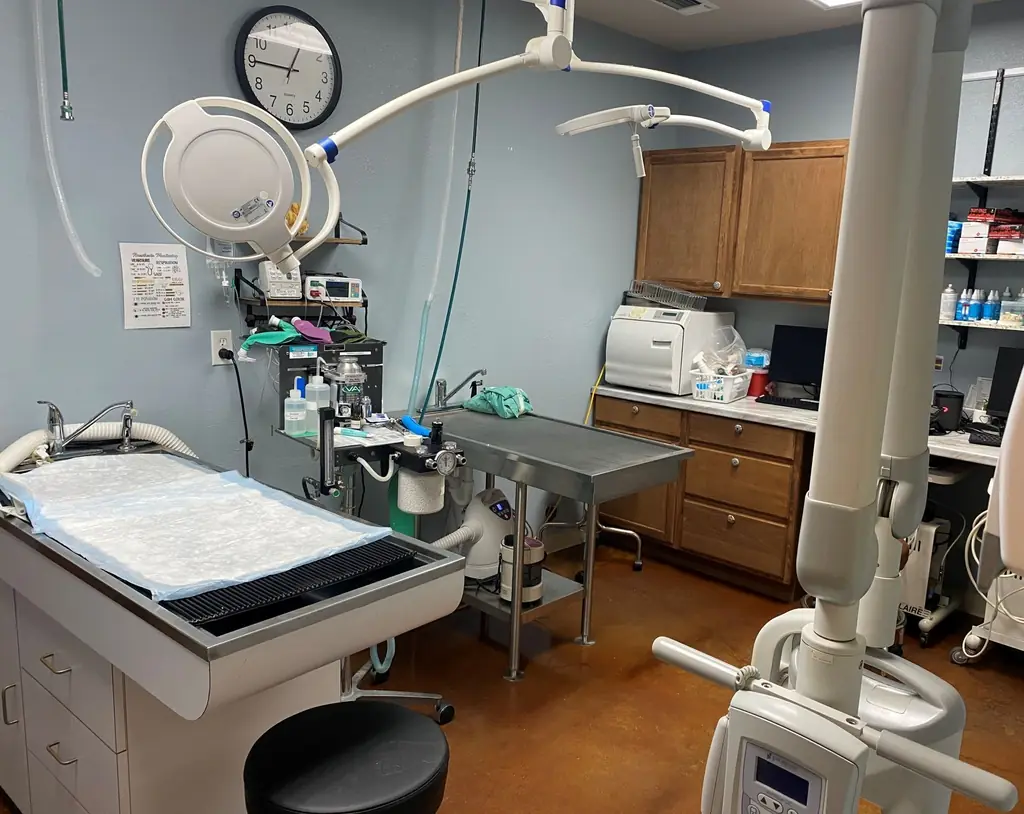
A dental cleaning is not the fifteen minute polish it sounds like. Your pet is under general anesthesia and monitored the entire time, because that is the only way to get an accurate look and reach below the gumline, where the real damage lives. Our team examines every tooth individually, checks for pockets around the root, and cleans above and below the gumline the way a human hygienist would if you sat still for it. Anything found to be fractured, abscessed, or too far gone gets addressed in the same visit rather than sending you home to schedule a second procedure. Afterward you get written home care instructions, because the point is not just to fix today's problem but to change what happens over the next year.
What routine care actually prevents
- bad breath
- painful chewing
- gum inflammation
- tooth decay and fractures
- oral infections
None of those are cosmetic problems. An infected tooth root sits inches from the sinuses and the jaw, and dental disease is one of the more common reasons an older pet quietly stops wanting to eat the way it used to. Getting ahead of it is part of why a wellness exam matters even when your dog or cat looks perfectly fine. You can read more about what we check at a routine visit on our wellness exams page.
Signs it might be time to look closer
- brown or yellow buildup along the gumline
- red, swollen, or bleeding gums
- drooling more than usual, sometimes tinged pink
- dropping food or chewing only on one side
- pawing at the mouth or face
- a visibly loose, discolored, or broken tooth
Cats tend to hide these signs even more effectively than dogs, so a change as small as eating a little slower, or favoring soft food over kibble when they never used to care, is worth mentioning at a visit rather than waiting to see if it gets worse. Left alone, periodontal disease does not stay contained to the mouth. The bacteria that build up under the gumline have a route into the bloodstream, and while we cannot promise any specific outcome for any individual pet, untreated dental disease is a real strain on a body that is often already managing other things as it ages.
What you can do between visits
Between professional cleanings, a home routine can do a lot to slow buildup down. Brushing several times a week is the gold standard, even if it takes patience to get a cat or a strong willed dog used to it. Start slow, with a fingertip and a pet safe toothpaste before you ever introduce a brush, and keep sessions short enough that your pet doesn't dread them. Dental chews and prescription dental diets can help scrape plaque as pets chew, and there are water additives designed to reduce bacteria between meals. None of that replaces a professional cleaning once tartar has hardened onto the tooth, but it buys time and makes the visits you do need less involved.
If it has been more than a year since anyone got a good look at your pet's back teeth, or you have noticed breath that seems worse than usual, that is worth a visit rather than a wait. We see dogs and cats from Kyle, Buda, Wimberley, South Austin, San Marcos, and the surrounding area, and a dental check is part of nearly every wellness visit we do. Full detail on what our dental care includes is on our dental care page, or call us at (512) 268-5003 to ask whether it is time to take a closer look.
Kyle Animal Hospital · (512) 268-5003
Call (512) 268-5003More articles
The Senior Pet Years: What Actually Changes, and What to Watch For
"He's just slowing down" is sometimes true. It's also the sentence we hear most often right before a bigger conversation.
Urgent Care or Emergency? How to Tell, and What Happens Next
The line between concerning and urgent and true emergency isn't always obvious from the outside, especially with an animal that can't tell you how bad it feels.